
We need to maintain it. We cannot afford to stop it.
Using RAM analysis to support leadership decisions
“We need to maintain it. We cannot afford to stop it.”
This is a familiar tension for operating leaders. Production targets assume equipment will be available, but equipment needs maintenance and sometimes fails. How much production should we realistically expect—and what would help us improve it?
A Reliability, Availability, and Maintainability (RAM) study helps answer those questions. It models how equipment works together, what happens when something stops, and how long it takes to restore service. Leaders can then compare maintenance approaches, backup equipment, and investment options before committing resources.
Think of it as a structured “what if” exercise for the facility. What if a critical pump fails? What if replacement parts take weeks to arrive? What if we install a standby unit?
The study produces estimates and comparisons. Its business value comes from how leaders use that evidence to set expectations, evaluate trade-offs, and act.
Start with the right questions
The three terms behind RAM describe straightforward concerns. Reliability considers whether equipment will keep working without failure. Availability considers whether it is ready when needed. Maintainability considers how readily it can be maintained or restored to service.
A RAM model brings these concerns together. Using equipment information, operating history, and maintenance data, it estimates how failures and interruptions affect the facility over time. It can also compare different maintenance arrangements, spare-parts provisions, and backup equipment.
For a leader, the useful starting point is identifying the questions the study needs to answer.
Are our production targets realistic? Would backup equipment allow maintenance without stopping production? Are we losing more output because equipment fails frequently, or because repairs take too long?
These questions give the study a business purpose. They help determine what information is needed and who should participate.
Before commissioning the analysis, identify who will use the findings and what decisions they can make. A study commissioned simply to “understand reliability” can produce an informative report while leaving the most important operating choices unresolved.
Understand what the facility can sustainably deliver
Design capacity describes what a facility is designed to produce under specified conditions. It does not automatically tell leaders what to expect across a full year of operation.
Maintenance, inspections, repairs, and unexpected interruptions all need to be considered. A facility may reach its design rate while everything is running, yet deliver considerably less when these interruptions are included.
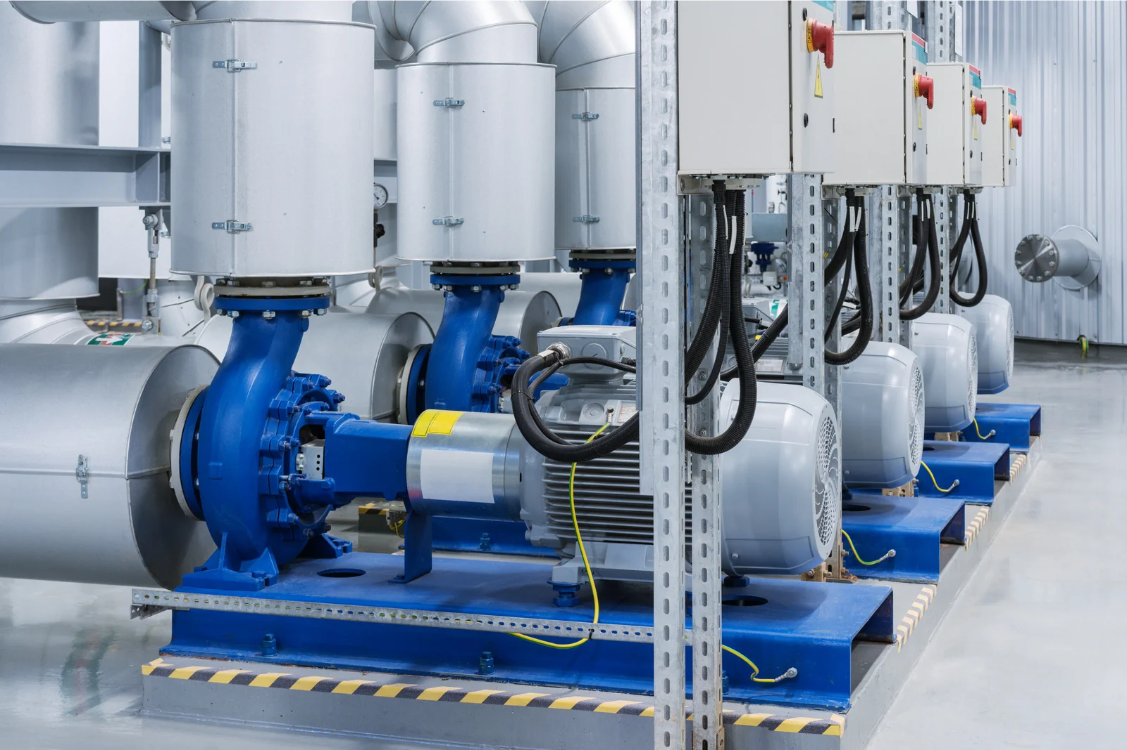
Consider a facility where one critical pump supports the entire process. Whenever that pump requires maintenance, production stops. Better planning may shorten the interruption, but it cannot remove the need to stop.
A standby pump could allow maintenance while production continues. However, it must be capable of doing the required work, start reliably, and allow the original pump to be safely disconnected for repair. If both pumps depend on the same power supply, a power failure could still stop them both.
The leadership question becomes clearer: would the additional investment provide enough production benefit and maintenance flexibility to justify its cost?
RAM helps compare the options. Leaders can then decide whether to accept the limitation, adjust production expectations, or invest in a change.
Make the cost of postponing maintenance visible
Postponing maintenance can preserve immediate output. Depending on the equipment and the work being deferred, it may also increase the chance or consequence of a failure later.
The immediate production loss is easy to see. The future failure is uncertain. This can make postponement easier to justify repeatedly, especially when managers are measured on short-term results.
A RAM study can help compare those consequences, but the assumptions matter. If a model removes planned maintenance without accounting for how that might affect future failures, its apparent production improvement could be misleading.
More maintenance is not automatically the answer either. For some equipment, deliberately operating until it fails is a reasonable choice. This approach, known as run-to-failure, depends on the consequences and cost of failure compared with the value of preventive work. NASA’s maintenance guidance recognizes it as an appropriate option in some circumstances.
The important distinction is whether the organization has made an informed choice or simply postponed the same decision again.
Planned shutdowns deserve similar attention. Their frequency and duration affect production, but shortening or extending the interval between them requires a sound understanding of equipment condition, inspection needs, and operating risk.
Invest where it makes the greatest difference
The equipment generating the most complaints is not necessarily causing the greatest production loss.
A pump that fails frequently may have effective backup. Another piece of equipment may fail rarely but stop the entire facility for days. Counting failures alone would miss that difference.
RAM helps leaders compare the effect on the whole operation. Returning to the pump example, installing a standby unit may remove one major source of lost production. The next limitation could then be a cooling system or a planned shutdown elsewhere in the process.
This is why improvement projects should be assessed together. The benefit of one investment can change the value of the next.
A useful leadership discussion asks:
How much production loss or risk could this option reduce?
What would it cost to install, operate, and maintain?
Would installation itself interrupt production?
Would it still be worthwhile if the assumptions prove optimistic?
The best option might be additional equipment. It might also be keeping a critical spare part on site, improving repair preparation, or changing maintenance practices.
The aim is to balance performance, risk, and spending over the equipment’s working life—an approach consistent with ISO 55001’s asset management principles.
Turn the findings into action
A useful model combines records with the experience of people who operate and maintain the facility. Work orders may record the repair. Operator notes may explain the production interruption, the delay in restarting, or a recurring problem that never generated a work order.
These accounts need to be checked together. The team should distinguish documented facts from estimates and make important assumptions visible.
Leaders do not need to inspect every calculation. They should ask what could change the recommendation. If repairs take twice as long as assumed, would the same option still make sense? If failures occur less often, would the investment still be justified?
Once a choice is made, assign someone to deliver it. Agree on the resources, responsibilities, and measures of success. Then compare actual results with expectations and update the model as the facility changes.
Start with one maintenance decision your organization keeps postponing. Use RAM to examine the alternatives and bring the findings to the people authorized to act.
If production expectations and maintenance needs keep putting your team at odds, Adduco can help you translate RAM findings into clear priorities, aligned leadership decisions, and accountable action. Connect with Adduco to discuss the operating challenge your team needs to resolve.
Ron Bettin, MBA, PMP, CMC, is a Canadian executive and public speaker with more than 25 years of leadership and entrepreneurial experience. He co-founded several companies and provides management consulting through Adduco Inc. to organizations of all sizes. Ron understands the importance of building value and enabling success through leading change and managing complexity. He is a graduate of the Southern Alberta Institute of Technology and holds an MBA from Queen’s School of Business.